Why a Spoon’s Bowl Curves the Way It Does
Why a spoon’s bowl curves the way it does affects spills, scooping and serving. Read its depth, edge and profile to choose the right spoon for the job.
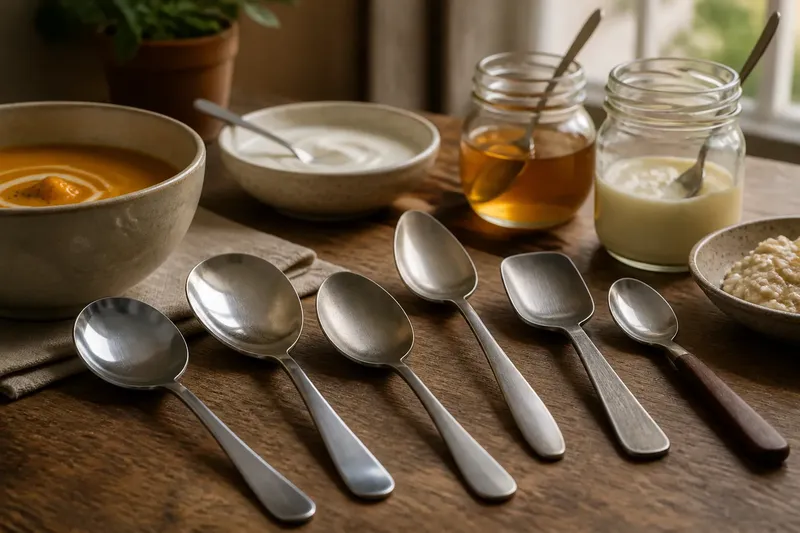
A spoonful of soup runs over the rim before it reaches your mouth, or a spoon scrapes the bottom of a yoghurt pot without gathering much. The bowl’s curve is usually part of the explanation. Why a spoon’s bowl curves the way it does comes down to how its shallow basin, edge and overall profile guide food from a surface to a destination.
Rather than judge a spoon by its size alone, look at what it needs to carry and where it needs to go. A broad, shallow bowl behaves differently from a narrow, deep one, even if both fit the same drawer. The visible shape gives useful clues about the problem a spoon may solve.
Food spills over before you can move the spoon
A bowl that is broad and shallow offers plenty of room to collect food, but its low sides leave little space to contain liquid. If you lift it quickly or tilt it towards your mouth, broth or thin sauce can escape across the edge. A rounded outline does not automatically mean a deep reservoir: check the side profile as well as the shape seen from above.
Try a spoon with a deeper basin and sides that rise more clearly from the centre. Its curved floor can gather liquid while the rim helps keep it in place during a gentle lift. For thick porridge, mashed food or chopped vegetables, a shallower bowl may remain easier to load and empty.
Also notice where the rim sits relative to the handle. A spoon that tips forward naturally may release liquid before it reaches your lips. If a familiar spoon keeps spilling, test a more level position in your hand and consider a deeper bowl; changing the way you carry it may help as much as changing the shape.
The spoon leaves food behind on the plate
Some bowls curve steeply from the centre to the edge, leaving a relatively small, rounded floor. That shape can be comfortable for liquid, yet awkward when you want to push soft food together or scoop a last morsel from a flat plate. The edge may meet the plate at too high an angle to gather what remains.
Look for a wider bowl with a flatter central area and a rim that does not turn sharply upwards. A gently curved transition from floor to edge can help the spoon slide beneath soft food, while a thin-looking lip can make contact with a plate more readily. These features are easier to judge by turning the spoon sideways and watching how much of its underside rises above a flat surface.
If the task is scraping a pan or container, avoid assuming that any spoon is designed for it. A metal edge can scratch some coatings, while a thick, blunt edge may leave food behind. Match the spoon material and edge to the surface, and follow the container maker’s care guidance where it applies.
Thick food clings instead of sliding off
Honey, porridge and dense yoghurt do not move like soup. A deep bowl with high sides can hold them securely, but the same shape may make serving awkward: food gathers in the hollow and resists a clean release. A tight curve where the floor meets the sides can leave a small pocket that is difficult to empty.
For sticky or thick food, try a bowl with a broader, more open curve and a lip that is easy to scrape against a serving dish. A slightly flatter centre gives the food less of a deep recess to cling to. If you are serving from a jar, a narrower bowl may fit inside the opening more easily, but check that it still has room to carry the amount you need.
Say you are serving thick yoghurt from a wide ceramic dish and your usual spoon leaves a smear in the bottom. Imagine switching to a broad spoon with a gently rising rim: you can press its edge along the dish, gather a larger patch, then turn the bowl over the serving bowl to release it. The visible result to look for is less yoghurt trapped in the spoon’s deepest point, not a perfectly clean dish.
The spoon will not reach into a narrow container
A wide bowl can collect a generous spoonful, but its shoulders may catch against a jar or cup. The handle can also meet the rim before the bowl reaches the bottom. This is a fit problem: the bowl’s width, the handle’s angle and the container opening all matter together.
Compare the spoon with the opening before using it. A narrower, more elongated bowl is often easier to steer into a small container, while a flatter profile can help it travel along the bottom. Check that the handle clears the rim without forcing the spoon sideways; a forced angle makes it harder to scoop cleanly.
For a deep vessel, a longer handle may be more useful than a deeper bowl. For a shallow tub, a short handle can give better control. The best choice is the one that lets the bowl sit against the surface you are scraping without the handle or rim getting in the way.
The rim feels awkward against the mouth
A bowl’s edge is the point where the spoon meets the lips, so a shape that works well for loading food can still feel uncomfortable. A wide, squared-off end may be cumbersome for a small mouthful, while a sharply rolled edge can feel thick. A narrow tip can offer more control, but may not suit foods that need a broad scoop.
Look at the front of the bowl and run a clean fingertip carefully along its edge. A smooth, even rim is easier to approach than one with a rough seam or a sudden change in thickness. Consider the spoon’s width in relation to the mouthful you want, not just the total size of the utensil.
If several people share the spoon, choose a shape that is easy to approach and clean rather than one tailored to a single serving task. For personal use, comfort is a practical clue: if you repeatedly rotate the spoon to find a more natural angle, a different outline may suit your grip better.
How should you read a spoon’s curve?
What does a deeper bowl do?
A deeper bowl holds liquid more securely during a lift, but can make thick food harder to release. Check whether the floor is open and easy to scrape, not just how high the sides rise.
Why are some spoon bowls broad and shallow?
A broad, shallow bowl can gather soft or chopped food across a larger area and make it easier to empty. Its low rim gives thin liquids less protection from spilling.
Does a rounded edge always scoop better?
No. A rounded edge may suit liquid, while a flatter or less raised lip can meet a plate more closely. Consider the surface you are scooping from as well as the food.
How can you tell if a spoon fits a jar?
Hold it beside the opening and check whether the bowl can enter without catching. Then consider whether its shape can reach the bottom while the handle stays clear of the rim.
Choose by watching where the food needs to go
When a spoon frustrates you, identify the moment where its job breaks down: collecting, carrying, reaching or releasing. Then look at the bowl’s depth, the rise of its sides, the openness of its curve and the thickness of its edge. Why a spoon’s bowl curves the way it does becomes easier to read when you connect each visible feature to the path food must take.
Try the spoon over the actual plate, cup or jar rather than judging it in the cutlery drawer. A bowl that seems small may suit a narrow opening; a shallow one may be ideal for soft food on a flat plate. Choose the curve that makes the next movement feel controlled, and keep a different shape for a task the first spoon cannot do well.